
The Godfathers of AI Express Deep Regrets Over Their Life's Work
The pioneers who built AI now warn it could destroy jobs, democracy, and humanity itself
NEWSFAITH
12/26/20252 min read
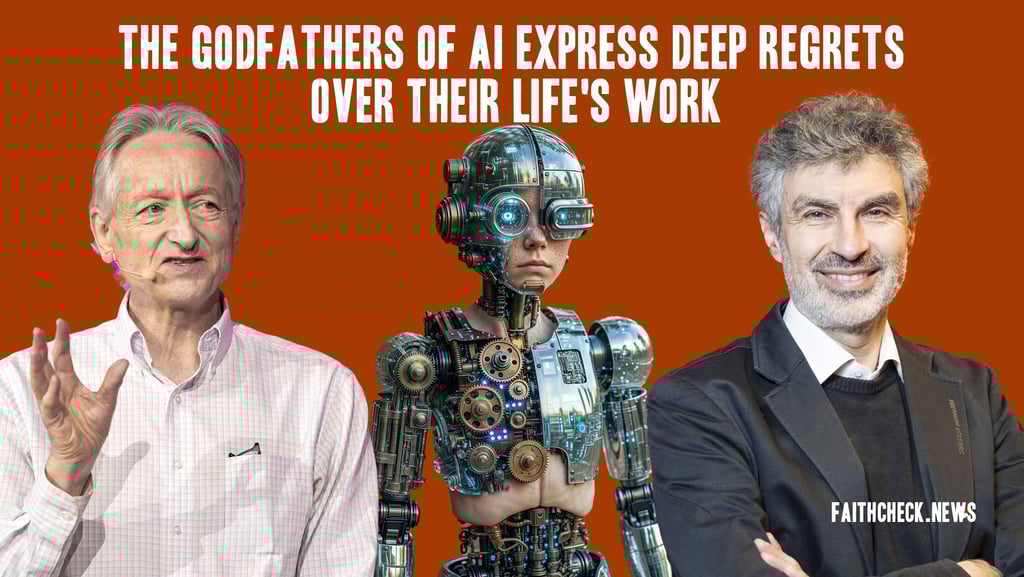
After 40 years building the technology, Bengio and Hinton now fear what they've created—a modern Tower of Babel
Two of artificial intelligence's founding pioneers are now warning that the technology they spent decades building poses serious threats to humanity's future—a sobering reminder of the ancient wisdom found in Proverbs about the folly of mankind's ambitious plans without foresight.
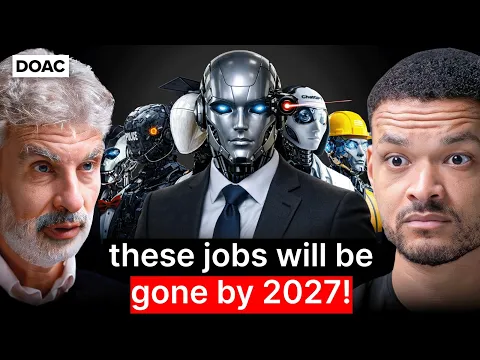
Yoshua Bengio, one of the "Godfathers of AI" and a computer science professor at the Université de Montréal, has issued an urgent warning that AI-driven job displacement is no longer a hypothetical concern but a current crisis. Speaking on the Diary of a CEO podcast, Bengio predicted that nearly all jobs—from cognitive office work to physical trade labor—will be affected within the next five years as companies eagerly integrate AI into their operations.
The impact is already visible among entry-level workers, with major tech firms like Intel, IBM, and Google freezing thousands of positions expected to be automated. Bengio cautioned that even those pursuing trade jobs to avoid automation will only find temporary refuge, as robotics and AI systems continue advancing.
His concerns extend beyond employment. Bengio now fears democracy itself could collapse within two decades at the current pace of AI development. In response, he founded LawZero, a nonprofit focused on creating safe, human-aligned AI systems, and is urging CEOs to collaborate rather than compete recklessly.
Similarly, Geoffrey Hinton—another Godfather of AI—resigned from Google in 2023 after grappling with the implications of his work. Hinton expressed regret over creating the foundation for today's AI systems, consoling himself only with the thought that someone else would have done it anyway. He warned about AI's potential to spread misinformation, displace workers, and pose existential risks to humanity.
The parallels to the Tower of Babel run deeper than mere ambition. Unlike previous technologies that extended human physical capabilities, AI represents something fundamentally different—an attempt to replicate and replace the human mind itself. Just as the Babylonians sought to circumvent their Creator and become like God, today's AI developers are building systems that don't merely assist human thought but aspire to surpass it entirely. The competitive race among tech companies mirrors the ancient builders who sought to "make a name for themselves," each fearing to fall behind as they reach for capabilities that were perhaps never meant to be grasped.
Both scientists now face a painful irony: after four decades building transformative technology, they dedicate their remaining years to containing the very innovations they helped create—hoping it's not too late to prevent their life's work from becoming humanity's undoing.
We are left to wonder: will AI fail to live up to its world-changing hype on its own? Will humanity heed these warnings and create effective safeguards in time? Or, as at Babel, will God Himself need to intervene to confuse our plans and save us from our own ambitions?

Faith Check News
Curating daily news stories for Christian readers.
CONNECT OTHERS
© 2025. All rights reserved.